
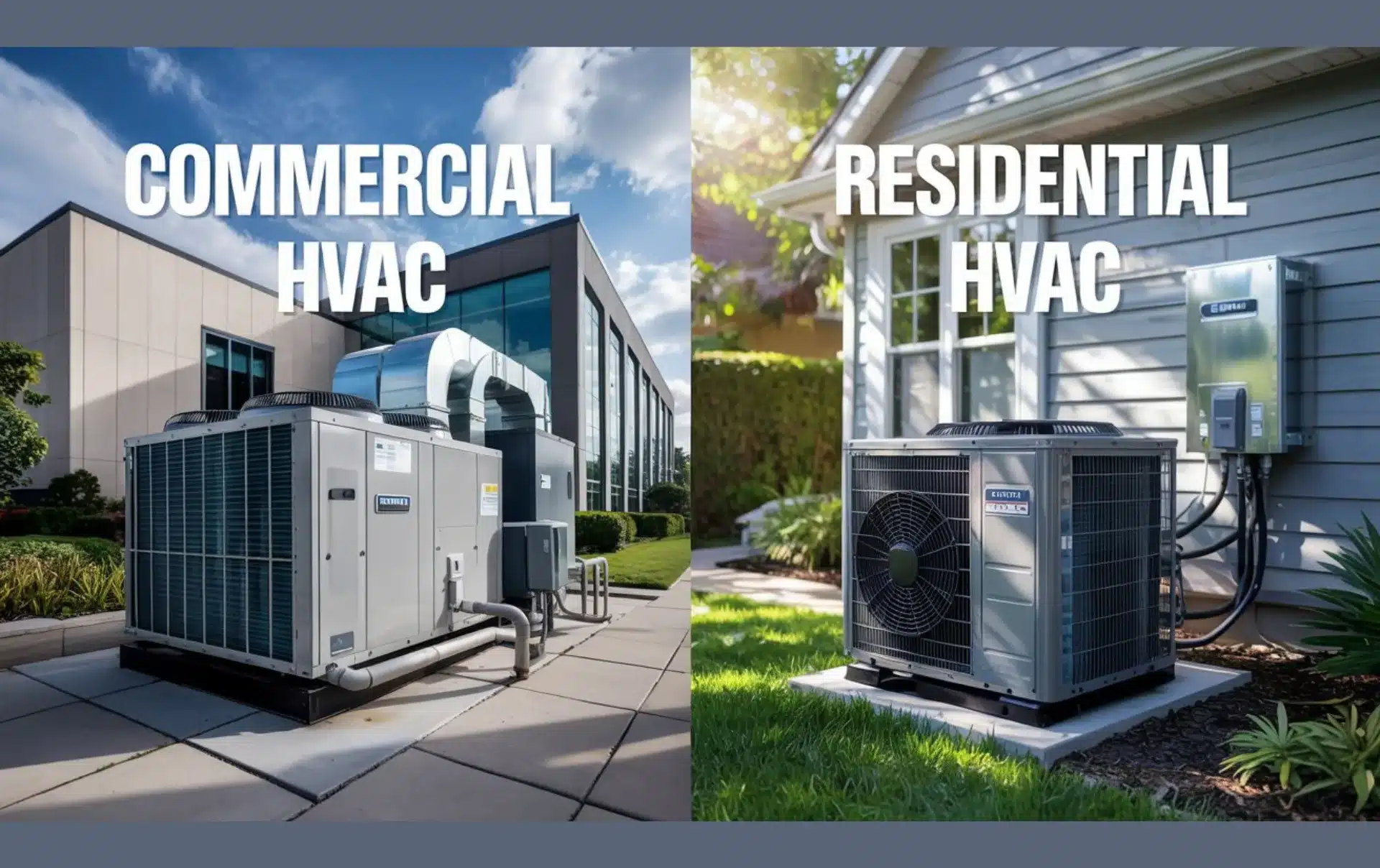
Whether you’re a homeowner in a Fort Worth or a business owner downtown, having a reliable heating, ventilation, and air conditioning (HVAC) system is essential for indoor comfort and air quality. Both commercial Vs residential HVAC systems aim to provide efficient temperature control and ventilation throughout the year.
However, these systems differ in design, size, complexity, and their intended usage.
This blog post explores the key differences between commercial and residential HVAC systems in Fort Worth, helping property owners make informed HVAC decisions.
Sizing Commercial vs Residential HVAC in Fort Worth
When it comes to HVAC systems, size definitely matters. The difference between commercial and residential hvac units isn’t just a matter of “bigger is better” – it’s about matching the system to the specific needs of the space.
In Fort Worth, where summer temperatures routinely soar above 100°F and winter can bring unexpected freezes, getting the right size is crucial for your comfort and your wallet.
Residential HVAC systems are designed to handle the heating and cooling needs of homes, which typically range from 1,500 to 3,000 square feet in the Fort Worth area. These systems are compact, relatively simple, and built to maintain comfortable temperatures in smaller spaces with consistent usage patterns.
Commercial HVAC systems, on the other hand, need to cool and heat much larger areas – often 10,000 square feet or more. Think about local businesses like shopping centers, office buildings, or manufacturing facilities. These spaces need serious cooling power to handle the Texas heat.
Size & Capacity Comparison Of Commercial vs Residential HVAC
| Feature | Residential HVAC | Commercial HVAC |
| Area Coverage | 1,500 – 3,000 sq. ft. | 10,000+ sq. ft. |
| System Size | Small to medium units | Large modular or packaged units |
| Energy Demand | Lower | Significantly higher |
| Installation Complexity | Basic | Advanced engineering required |
I’ve spent decades helping Fort Worth property owners understand that larger commercial spaces demand more energy, power, and airflow distribution compared to homes. It’s not just about the square footage – it’s about the number of people, heat-generating equipment, and varying usage throughout the day.
Choosing the wrong system size leads to all sorts of problems I’ve seen time and again. An undersized system for a commercial space will run constantly, straining to keep up with demand. This leads to poor energy efficiency, sky-high utility costs, and frequent repairs due to overworked components. On the flip side, an oversized system will short cycle – turning on and off too frequently – which wastes energy and fails to properly dehumidify the space.
For Fort Worth homeowners, a properly sized residential system should maintain comfortable temperatures even on the hottest days without excessive cycling. For business owners, commercial systems need to handle peak occupancy times while still operating efficiently during slower periods.
Unit Placement Guide of Residential vs Commercial HVAC Setup in Fort Worth
Where you place your HVAC unit makes a big difference in both performance and maintenance accessibility. The placement strategies for residential and commercial systems couldn’t be more different, and for good reasons.
Residential HVAC units are commonly installed in backyards, side yards, or garages to maintain home aesthetics and allow for easy maintenance. In Fort Worth neighborhoods, you’ll typically see outdoor condensing units tucked away next to homes, often with some landscaping to make them less noticeable. The indoor components – like furnaces and air handlers – are usually in utility closets, attics, or basements.
This placement works well for homes because:
- It keeps noise away from living spaces
- It maintains curb appeal
- It provides easy access for homeowners and technicians
- It protects equipment from severe weather while still allowing proper airflow
Commercial HVAC systems are often located on rooftops of buildings in Fort Worth to save ground space, reduce noise disruption, and simplify access for technicians. Drive through downtown Fort Worth or any commercial district, and look up – you’ll see rows of HVAC equipment on nearly every building.
Rooftop installations are especially beneficial for urban businesses where space is limited. They keep noisy equipment away from customers and employees while freeing up valuable ground space for parking, landscaping, or building expansion.
For restaurants, retail shops, and offices in Fort Worth’s busy districts, rooftop placement offers several advantages:
- Reduced vandalism risk
- Better air intake quality (away from street-level pollutants)
- Simplified maintenance access without disrupting business operations
- Easier expansion when adding more cooling capacity
- Reduced noise complaints from neighboring properties
In my 30+ years working with Fort Worth businesses, I’ve seen how proper placement can extend equipment life. Rooftop units in our area need proper weatherproofing and lightning protection due to our severe thunderstorms. For residential units, I always recommend shade where possible to improve efficiency during our brutal summers.
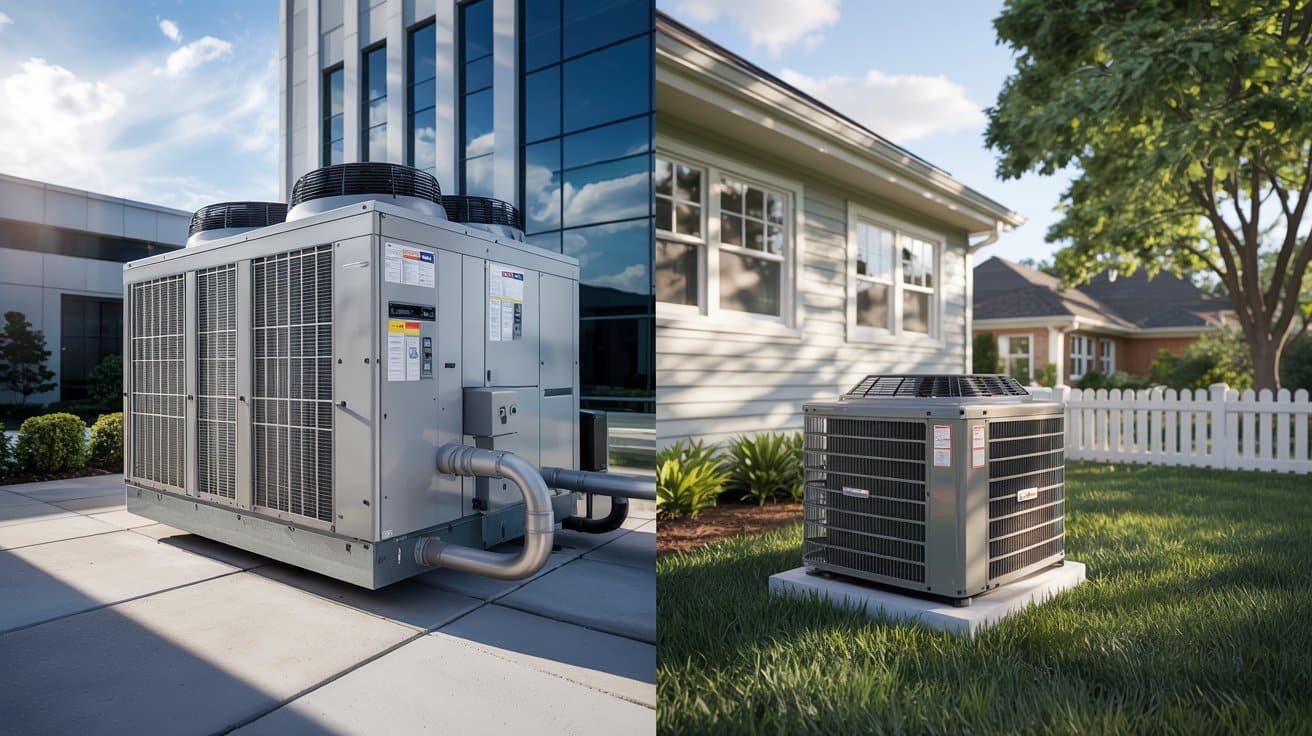
Commercial vs Residential HVAC: What’s More Complex in Fort Worth?
One of the biggest differences between commercial and residential HVAC systems is their level of complexity. This isn’t just about having more parts – it’s about sophisticated design that meets more challenging demands.
Commercial HVAC systems feature advanced components like zone controls, economizers, energy management systems (EMS), and variable air volume (VAV) units. These aren’t just fancy terms – they’re essential features that allow businesses to maintain comfort while controlling costs.
Let me break these down for you:
Zone controls allow different areas of a building to maintain different temperatures. Imagine a Fort Worth office building where the sun-drenched western side needs more cooling than the eastern side in the afternoon. Zone controls make this possible without freezing out employees on the cooler side.
Economizers automatically draw in cooler outside air when conditions are right, reducing the need for mechanical cooling. During Fort Worth’s milder spring and fall months, this can dramatically cut energy costs.
Energy management systems (EMS) are sophisticated computer controls that monitor multiple building systems, tracking efficiency and optimizing performance. These systems can adjust settings based on occupancy, weather forecasts, and utility rate changes.
Variable air volume (VAV) units adjust the amount of air flowing to different zones based on need, rather than simply turning on or off. This provides more precise temperature control and increased efficiency.
These systems can be tailored to suit various building layouts, occupancy levels, and operating hours. A downtown Fort Worth hotel, for example, needs different settings for guest rooms, conference centers, and restaurants – all changing throughout the day as usage shifts.
Residential systems are simpler and typically consist of one thermostat, limited zoning, and basic ductwork. Most Fort Worth homes have a single air handler, one thermostat, and a straightforward duct system that distributes air throughout the home. While some newer homes may have basic zoning with multiple thermostats, the complexity remains much lower than commercial systems.
Commercial HVAC requires customized system architecture to meet diverse comfort needs across large properties. This isn’t one-size-fits-all equipment – it’s engineered specifically for each building’s unique requirements. A hospital in Fort Worth has completely different needs than a retail store or a manufacturing facility, even if they’re similar in size.
This complexity means that commercial systems typically need specialized technicians with advanced training. As someone who’s worked on both types of systems for decades, I can tell you that diagnosing issues in a commercial system often requires understanding the interaction between multiple sophisticated components.
Differences Between Commercial and Residential HVAC Equipment in Fort Worth
The equipment that makes up HVAC systems differs significantly between commercial and residential applications. These differences reflect the varied demands, scale, and complexity of the environments they serve.
Commercial HVAC systems often include chillers, cooling towers, air handlers, boilers, and rooftop packaged units (RTUs). Let me explain what each of these components does:
Chillers cool water that circulates through a building to remove heat. They’re extremely efficient for large spaces and can be water-cooled or air-cooled.
Cooling towers work with water-cooled chillers to release heat outside the building. You might have noticed these large structures on top of Fort Worth’s larger buildings – they’re essential for high-efficiency cooling in large facilities.
Air handlers move air through the building, passing it over heating or cooling coils before distributing it through ductwork. Commercial air handlers are much larger than residential ones and often include more sophisticated filtration.
Boilers heat water for distribution through the building for warming spaces or providing hot water. Commercial boilers are typically much larger and operate at higher pressures than residential models.
Rooftop packaged units (RTUs) combine heating and cooling components in a single unit designed for rooftop installation. These are common on Fort Worth’s restaurants, retail spaces, and smaller office buildings.
These components work together to deliver efficient heating and cooling across large square footage. A typical office building in downtown Fort Worth might use a combination of chillers, boilers, and air handlers to maintain comfort across multiple floors and zones.
Residential systems consist of smaller equipment like central air conditioners, furnaces, or heat pumps. These systems are designed for the simpler needs and smaller scale of homes. A typical Fort Worth home might have:
- A split system with an outdoor condensing unit and indoor air handler
- A gas furnace for heating
- A single blower to move air through the home
- Basic filtration systems
- Simple ductwork with few zones
Skilled technicians with commercial HVAC certifications are required for proper equipment maintenance and repair. Commercial equipment often operates at higher pressures, voltages, and capacities than residential equipment, requiring specialized knowledge and safety training.
Key HVAC Equipment Comparison
| Component Type | Residential HVAC | Commercial HVAC |
| Cooling Source | Central AC or heat pump | Rooftop units, chillers, cooling towers |
| Heating Source | Furnace or electric heat | Boilers, industrial-grade heaters |
| Ventilation | Standard duct system | Advanced ductwork with VAV & dampers |
| Controls | Basic thermostat | Multi-zone thermostats and EMS |
The lifespan of components also differs. Commercial equipment is built for continuous operation and typically lasts 15-20 years with proper maintenance. Residential equipment, used intermittently, generally lasts 10-15 years in Fort Worth’s climate. The intense summer heat and occasional winter freezes put significant stress on all HVAC equipment in our region.
Comparing Residential VS Commercial HVAC Maintenance Costs in Fort Worth
Let’s talk about money – specifically, what it costs to keep your HVAC system running properly year after year. The difference in maintenance costs between commercial vs residential hvac systems is substantial, and understanding these costs helps property owners budget appropriately.
Commercial HVAC maintenance is more expensive due to the size, complexity, and frequency of inspections required. A typical commercial maintenance visit involves checking numerous components, from compressors and fan motors to complex control systems and multiple thermostats.
For a mid-sized office building in Fort Worth, quarterly maintenance visits might run $2,000-$5,000 per year, depending on system size and complexity. Larger facilities with multiple systems or specialized requirements (like hospitals or data centers) will pay significantly more.
These higher costs reflect:
- More specialized technician training and certification
- Longer service visits due to system complexity
- Higher-grade replacement parts
- More frequent service intervals
- Regulatory compliance requirements
Businesses in Fort Worth often enter into maintenance contracts to ensure regular servicing. These contracts typically provide:
- Priority emergency service
- Scheduled maintenance visits timed for pre-summer and pre-winter peaks
- Discounted repair rates
- Extended equipment warranties
- Detailed service records for regulatory compliance
Residential systems are easier to maintain and cost less to service. A typical annual maintenance visit for a Fort Worth home runs $150-$300, usually split between spring air conditioning service and fall heating service.
Homeowners can handle some basic maintenance themselves, like changing filters monthly (especially important during our peak summer and allergy seasons). However, professional maintenance is still essential for checking refrigerant levels, electrical connections, and system performance.
Regardless of property type, regular HVAC maintenance ensures system longevity and optimal performance. I’ve seen countless systems fail prematurely due to neglected maintenance. The harsh reality is that skipping a $200 maintenance visit can lead to a $5,000 replacement years before it should be necessary.
In Fort Worth’s extreme climate, where systems work harder than in many other regions, proper maintenance is particularly important. Our hot summers put enormous stress on cooling systems, while the occasional winter freezes can damage improperly maintained heating systems.
For both residential and commercial properties, the return on investment for proper maintenance is clear: lower utility bills, fewer emergency repairs, longer equipment life, and better comfort. It’s always cheaper to maintain than to replace.
How Much Energy Commercial vs Residential HVAC Systems Consumes ?
Energy efficiency isn’t just good for the environment – it’s good for your bottom line. Understanding the energy consumption patterns of different HVAC systems helps property owners make informed decisions about equipment selection and operation.
Commercial HVAC systems consume more electricity and gas due to their larger operational load. A typical office building in Fort Worth might use tens of thousands of kilowatt-hours per month for cooling alone during summer. This higher consumption comes from:
- Cooling larger spaces
- Accommodating higher occupancy
- Managing heat from equipment and lighting
- Operating longer hours
- Maintaining specific conditions for different zones
Fort Worth businesses must comply with local and federal energy efficiency standards, such as LEED certifications or ENERGY STAR guidelines. These standards encourage businesses to invest in high-efficiency equipment and building practices. For new commercial construction in Fort Worth, energy codes dictate minimum efficiency requirements for HVAC equipment.
Many businesses find that exceeding these minimum standards pays off through lower operating costs. High-efficiency commercial systems might cost 15-30% more upfront but can reduce energy bills by similar percentages over their lifespan.
Residential HVAC systems are also subject to efficiency ratings like SEER (Seasonal Energy Efficiency Ratio), but with more lenient requirements. Current standards require new residential air conditioners to have a minimum SEER rating of 14 in the South, including Texas. However, many Fort Worth homeowners choose higher-efficiency models (16-20 SEER) to combat our extreme summer heat.
For both commercial and residential properties, several factors influence energy consumption:
- Building insulation and envelope quality
- Windows and doors (type, orientation, and condition)
- Thermostat settings and scheduling
- Maintenance status of equipment
- Ductwork condition and insulation
- Local climate conditions
Incorporating programmable thermostats and smart controls can enhance efficiency for both property types. In commercial settings, sophisticated building automation systems can adjust cooling based on occupancy, sunlight, and outdoor temperatures. For homes, even basic programmable thermostats can reduce energy usage by 10-15% by adjusting temperatures when you’re away or sleeping.
Fort Worth’s energy rates make efficiency particularly important. With summer electric rates among the highest in Texas, efficient operation can mean the difference between profitable operation and budget-busting utility bills for businesses. For homeowners, efficient systems mean more affordable cooling during our brutally hot summers.
From my decades working with Fort Worth property owners, I’ve found that investing in preventative maintenance and gradual equipment upgrades almost always pays off through reduced energy costs and fewer emergency repairs.
How Commercial Vs Residential HVAC Systems Different in Flexibility Fort Worth.
Flexibility matters when it comes to HVAC systems, especially as buildings change over time. The ability to expand, reconfigure, or upgrade a system can make a significant difference in both performance and cost.
Commercial HVAC systems offer modular designs that support expansion, upgrades, and zoning for different departments or building levels. This modularity means that as a business grows or changes, the HVAC system can adapt without a complete replacement.
For example, a Fort Worth retail space might start with a basic rooftop unit, then add additional units as the store expands. An office building might begin with a single floor, then expand the system to accommodate additional levels as the company grows. This incremental approach helps manage capital costs while ensuring proper conditioning for the entire space.
Commercial systems typically allow for:
- Adding cooling or heating capacity in stages
- Creating new zones as floor plans change
- Upgrading controls without replacing mechanical equipment
- Incorporating specialized equipment for particular areas
- Integrating with building management systems
Customization is essential for businesses with unique cooling and heating needs, such as restaurants, healthcare centers, or manufacturing units. Each of these environments has specific requirements that standard systems can’t meet.
In restaurants, powerful exhaust systems for kitchens require carefully balanced makeup air to prevent negative building pressure. Healthcare facilities need precise humidity control and advanced filtration. Manufacturing spaces might require spot cooling for equipment or specialized ventilation for process byproducts.
I’ve worked with countless Fort Worth businesses to develop customized solutions for their specific needs. A data center needs different cooling strategies than a gym or a grocery store, even if they occupy similar-sized buildings.
Residential HVAC units are typically standalone and harder to customize without a full system replacement. Most homes use a single system designed to condition the entire space evenly. While some higher-end homes have multi-zone systems or even multiple units for different floors, the level of customization remains limited compared to commercial systems.
For homeowners, customization typically involves:
- Basic zoning with dampers and multiple thermostats
- Adding air purification or humidity control features
- Upgrading to variable-speed equipment
- Incorporating smart thermostat technology
The lack of modularity in residential systems means that when it’s time to upgrade, homeowners usually need to replace the entire system rather than components. This “all or nothing” approach makes planning for replacements more critical for homeowners.
For both commercial and residential systems, working with experienced Fort Worth HVAC professionals helps ensure that any customization or expansion maintains system balance and efficiency. Properly engineered solutions prevent the problems that often result from piecemeal changes by inexperienced contractors.
Conclusion
After decades in the Fort Worth HVAC industry, I’ve seen firsthand that understanding the differences between commercial and residential systems is crucial for making informed decisions about your property’s comfort needs.
Commercial HVAC systems are designed with scalability, sophistication, and customization in mind, supporting the diverse needs of businesses through modular designs, advanced zoning, and specialized components. These systems require significant investment in both equipment and ongoing maintenance but deliver the performance necessary for larger spaces with complex requirements.
Residential systems, while simpler and more affordable, are purpose-built for home comfort with standardized components and straightforward installation. They may offer fewer customization options but provide reliable performance for typical household needs.
Whether you’re managing a downtown office building or maintaining comfort in your suburban home, choosing the right system type—and partnering with experienced Fort Worth HVAC professionals who understand our unique climate challenges—is essential for optimal performance, energy efficiency, and long-term value.
Remember that in Fort Worth’s extreme climate, proper sizing, strategic placement, regular maintenance, and energy efficiency aren’t just recommendations—they’re necessities for system longevity and your comfort year-round.
Frequently Asked Questions About Commercial vs Residential HVAC
Q1. What’s the main difference between commercial and residential HVAC systems?
A: Commercial HVAC systems are larger, more complex, and designed for heavy use, while residential systems are smaller and simpler.
Q2. Which is more expensive: commercial or residential HVAC in Fort Worth?
A: Commercial HVAC systems cost significantly more due to size, customization, and installation complexity.
Q3. How do I know if I need a commercial HVAC system?
A: If you manage an office, retail store, or large building, you’ll need commercial HVAC for consistent comfort.
Q4. Can a residential contractor handle commercial HVAC installation?
A: No, commercial HVAC requires specialized contractors with experience in large-scale systems.


