

Choosing the right commercial building HVAC systems can make or break your business operations. The wrong system leads to uncomfortable employees, unhappy customers, and sky-high energy bills. But the right choice delivers years of reliable comfort while saving you thousands on operating costs.
This guide shows you exactly how to choose the best commercial building HVAC systems for your property—with clear explanations and practical insights you can use right now.
Types of HVAC Systems For Commercial Buildings You Should Know
Think of HVAC systems like business software. You wouldn’t use basic accounting software to run a complex manufacturing operation, right? The same logic applies to commercial HVAC systems.
Each type serves a specific purpose. Here’s what you need to know about each one.
1. The Heavy-Duty Option is Chillers
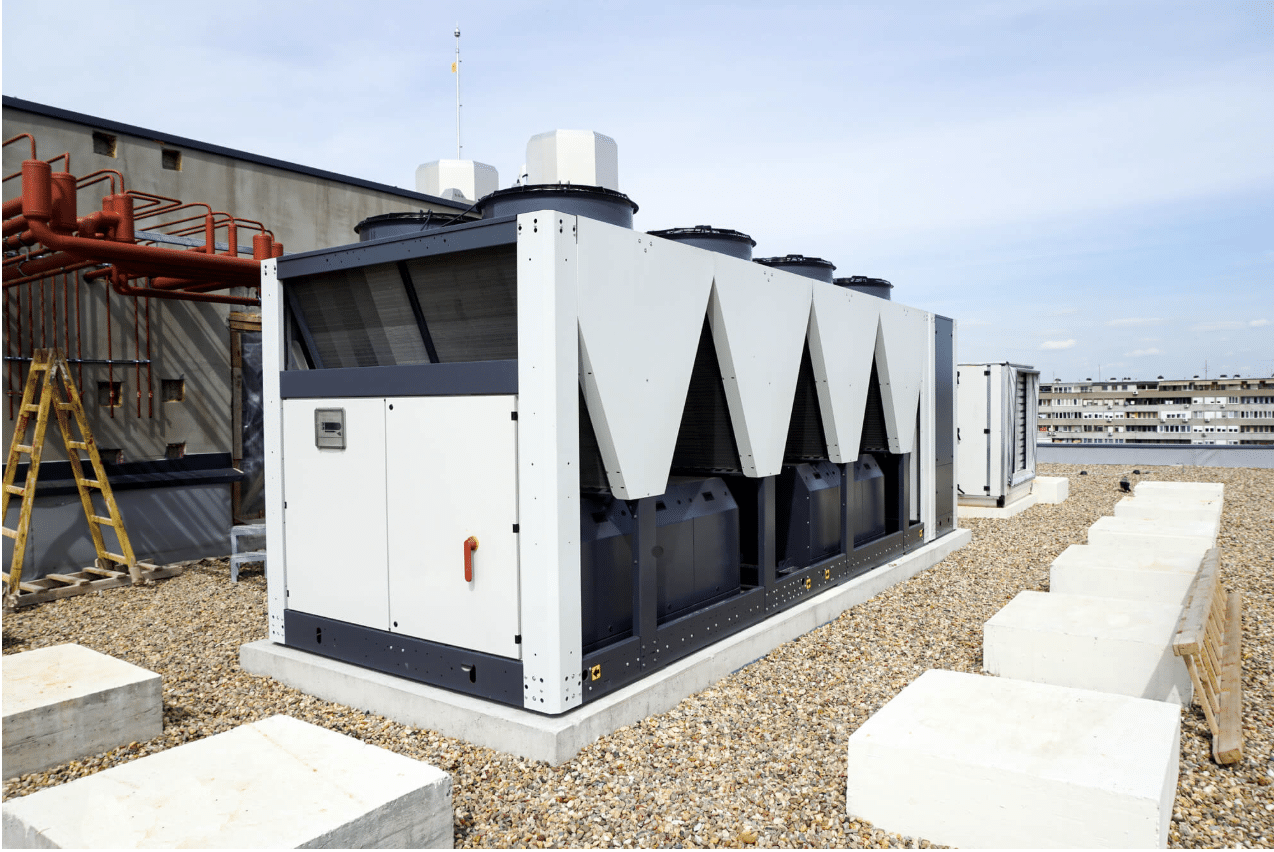
Which commercial buildings are ideal for Chillers: Large-scale facilities like hospitals, universities, manufacturing plants, data centers, and corporate campuses over 100,000 square feet.
Why Chillers are ideal for your commercial buildings: Chillers create chilled water that flows through your building to cool the air. They’re designed for heavy-duty operation and can handle massive cooling loads efficiently. They’re scalable, meaning you can add capacity as your business grows.
The pros:
• Incredibly efficient for large spaces
• Scalable for future expansion
• Last 20-30 years with proper maintenance
• Precise temperature control
• Can serve multiple buildings from one central plant
The cons:
• High upfront investment costs
• Complex installation requiring skilled professionals
• Need dedicated mechanical rooms
• Requires water treatment and specialized maintenance
The Average Installation cost to install Chillers: $100,000 to $500,000+ depending on capacity and complexity. Large campus HVAC installations cost can exceed $1 million.
2. The Popular Choice is Rooftop Units (RTUs)
Which commercial buildings are ideal for Rooftop Units: Office buildings, retail stores, restaurants, small warehouses, medical offices, and single-story commercial buildings between 2,000-50,000 square feet.
Why Rooftop Units are ideal for your commercial buildings: RTUs are self-contained systems that sit on your roof. Everything you need – heating, cooling, and ventilation – comes in one packaged unit. They’re the most common choice for good reason: they work well and don’t take up valuable floor space.
The pros:
• Save valuable indoor floor space
• Easy access for maintenance and repairs
• Relatively affordable installation costs
• Wide availability of service technicians
• Can serve multiple zones with proper ductwork
The cons:
• Exposed to weather elements shortening lifespan
• Can be noisy for nearby offices
• Limited efficiency compared to VRF systems
• Require roof structural support
The Average Installation cost to install Rooftop Units: $15,000 to $35,000 per unit depending on size and efficiency ratings. Multiple units for larger buildings increase total costs.
3. The Smart Choice is VRF/VRV Systems
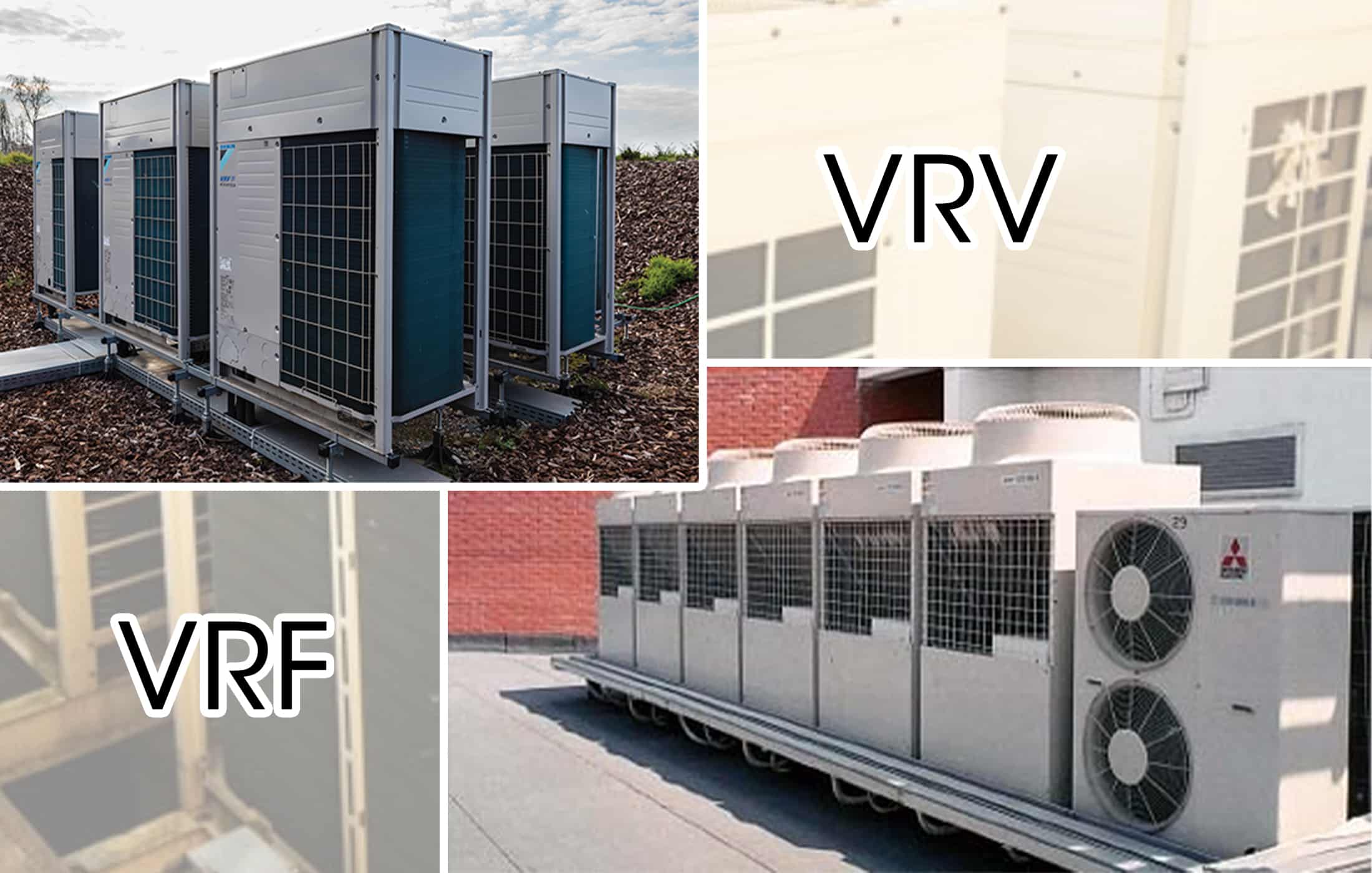
Which commercial buildings are ideal for VRF/VRV Systems: Multi-tenant office buildings, hotels, mixed-use developments, medical facilities, and buildings with varying occupancy patterns or different temperature needs per zone.
Why VRF/VRV Systems are ideal for your commercial buildings: Variable Refrigerant Flow technology allows individual control of each zone while maintaining incredible efficiency. They can simultaneously heat one area while cooling another, making them perfect for buildings with diverse needs.
The pros:
• Amazing energy efficiency ratings
• Individual zone temperature control
• Quiet operation perfect for offices
• Easy to expand by adding indoor units
• Precise temperature control in each space
The cons:
• Higher upfront investment costs
• Requires experienced, specially-trained installers
• Limited technicians qualified for service
• Complex control systems need professional maintenance
The Average Installation cost to install VRF/VRV Systems: $25,000 to $75,000 depending on number of zones and building complexity. Multi-story installations can reach $100,000+.
4. The Budget-Friendly Option is Split Systems
Which commercial buildings are ideal for Split Systems: Small offices, boutique retail shops, professional service offices, small restaurants, and single-room commercial spaces under 5,000 square feet.
Why Split Systems are ideal for your commercial buildings: Split systems offer simple, reliable cooling with one indoor unit connected to one outdoor unit. They’re perfect when you need basic cooling for smaller spaces without complex zoning requirements.
The pros:
• Lowest upfront investment cost
• Simple installation process
• Widely available service technicians
• Easy to understand and operate
• Good efficiency for smaller applications
The cons:
• Not suitable for large commercial spaces
• Limited zoning and control options
• Multiple units needed for larger buildings
• Outdoor units require space and access
The Average Installation cost to install Split Systems: $7,000 to $18,000 per system depending on capacity and efficiency. Multiple units for larger spaces increase total investment.
5. The Simple Solution is Packaged Units
Which commercial buildings are ideal for Packaged Units: Small to medium retail stores, strip mall units, small offices, workshops, and single-story buildings with straightforward heating and cooling needs.
Why Packaged Units are ideal for your commercial buildings: All components – heating, cooling, and air handling – come in one compact unit. They’re designed for simple installations and straightforward operation, making them perfect for businesses that want reliable comfort without complexity.
The pros:
• Compact all-in-one design
• Simple installation process
• Lower labor and installation costs
• Easy access for maintenance
• Good for replacement projects
The cons:
• Lower efficiency than VRF or chiller systems
• Limited customization options
• Weather exposure affects lifespan
• Less precise temperature control
The Average Installation cost to install Packaged Units: $12,000 to $28,000 depending on capacity and features. Ground-mounted units may cost less than rooftop installations.
6. For Cold Climates is Boilers & Furnaces
Which commercial buildings are ideal for Boilers & Furnaces: Buildings in cold climates, older commercial properties with existing heating infrastructure, warehouses, manufacturing facilities, and buildings requiring high-temperature heating.
Why Boilers & Furnaces are ideal for your commercial buildings: In cold climates, dedicated heating equipment provides reliable, efficient heating. Boilers use hot water or steam distribution, while furnaces use heated air. They’re often paired with separate cooling systems for year-round comfort.
The pros:
• Reliable heating in extreme cold climates
• Long equipment lifespan (20-30 years)
• Proven, dependable technology
• Excellent for high heating demand buildings
• Can use various fuel sources
The cons:
• Usually require separate cooling systems
• Complex installation in new construction
• Higher maintenance requirements
• Limited efficiency compared to heat pumps
The Average Installation cost to install Boilers & Furnaces: $15,000 to $45,000 for furnace systems. Boiler systems range from $25,000 to $75,000+ depending on size and fuel type.
Here’s the bottom line: Your building type determines your best system choice. Small retail shop? Split systems work great. Multi-tenant office building? Consider VRF. Massive facility? You probably need chillers.
Don’t let anyone pressure you into the wrong system for your needs.
Why Proper Sizing Matters for Commercial Building HVAC Systems
Here’s a mistake that costs business owners thousands of dollars every year. They think bigger is always better when it comes to HVAC systems.
It’s not.
In HVAC, “sizing” doesn’t mean physical size. It means capacity. How much heating or cooling the system can provide.
Think of it like Goldilocks. Not too big. Not too small. Just right.
The Problem with Oversized Commercial HVAC Systems
You might think a bigger system means better comfort. You’re wrong. Here’s what actually happens:
1. Short cycling: The system reaches the set temperature too quickly. Then it shuts off. Then it starts again. Over and over. This wastes energy and wears out components faster.
2. Poor humidity control: Oversized systems don’t run long enough to remove moisture from the air. You get cold, clammy conditions that feel uncomfortable.
3. Higher costs: You pay more upfront for a bigger system. Then you pay more to operate it inefficiently.
4. Uneven temperatures: Some areas get too cold while others stay warm. Your employees complain. Your customers notice.
The Problem with Undersized Commercial HVAC Systems
An undersized system is like trying to fill a swimming pool with a garden hose. It works, but barely.
• Constant running: The system never shuts off. It’s always trying to catch up. This drives up your energy bills.
• Poor comfort: Some areas never reach the right temperature. Hot spots develop. People get frustrated.
• Early failure: The system works overtime every day. Components wear out faster. You face expensive repairs sooner.
• Higher operating costs: An overworked system uses more energy to deliver less comfort.
How HVAC Professionals Size Systems Correctly
Good HVAC contractors don’t guess. They calculate. Here’s what they consider:
• Building size and layout: Square footage is just the starting point. Ceiling height matters. Room configuration affects airflow.
• Insulation levels: Better insulation means smaller system requirements. Poor insulation needs more capacity.
• Window placement and type: South-facing windows create more heat gain. Energy-efficient windows reduce load.
• Occupancy patterns: More people mean more heat gain. Varying occupancy affects load calculations.
• Equipment and lighting: Computers, servers, and lighting all generate heat. This affects cooling needs.
• Local climate: Temperature extremes, humidity levels, and seasonal variations all matter.
• Building use: A restaurant has different needs than an office. A gym needs more ventilation than a retail store.
Quick HVAC Sizing Reference Guide
Here are rough estimates to give you a starting point. But remember: these are just ballpark figures. Always get professional load calculations.
| Building Type | Size Range | Recommended System Size |
| Small retail shop | 1,000-2,000 sq ft | 2-5 tons |
| Mid-size office | 5,000-10,000 sq ft | 10-20 tons |
| Large warehouse | 25,000-50,000 sq ft | 25-60 tons |
| High-rise or multi-floor office | Varies | Custom VRF or chiller system |
One ton of cooling equals 12,000 BTUs per hour. So a 5-ton unit provides 60,000 BTUs of cooling capacity.
The Professional Advantage
Professional load calculations use industry-standard methods. Manual J for residential. ASHRAE standards for commercial. These aren’t just guidelines. They’re proven formulas that account for all the variables.
Don’t let anyone size your system by “rules of thumb” or square footage alone. Proper calculations save you money and ensure comfort.
The takeaway: Proper sizing is crucial for comfort, efficiency, and longevity. Don’t guess. Calculate. Your wallet will thank you.
Energy Efficiency in Commercial Building HVAC Systems
Your HVAC system is probably your biggest energy user. In many commercial buildings, heating and cooling account for 40-60% of total energy costs.
That’s a lot of money every month. But here’s the good news: choosing an efficient system can cut those costs dramatically.
Understanding Efficiency Ratings in Commercial HVAC Systems
HVAC efficiency ratings might seem confusing at first. But they’re actually pretty simple once you know what to look for.
1. SEER (Seasonal Energy Efficiency Ratio): This measures cooling efficiency over an entire season. Higher numbers mean better efficiency. Think of it like miles per gallon for your car.
2. EER (Energy Efficiency Ratio): Similar to SEER, but measured under specific test conditions. It gives you a snapshot of peak performance.
3. IEER (Integrated Energy Efficiency Ratio): This is newer and more realistic. It accounts for part-load conditions, which is how your system runs most of the time.
4. COP (Coefficient of Performance): For heat pumps, this measures heating efficiency. Higher numbers are better.
Commercial HVAC Energy Efficiency Ratings Table
Here are efficiency ranges for different system types:
| System Type | Good | Better | Best |
| Split Systems | 13-15 SEER | 16-18 SEER | 19+ SEER |
| Rooftop Units | 11-13 SEER | 14-16 SEER | 17+ SEER |
| VRF Systems | 15-17 SEER | 18-20 SEER | 21+ SEER |
| Chillers | 9-11 IEER | 12-14 IEER | 15+ IEER |
4. Installation and Upfront Costs of Commercial Building HVAC Systems
Let’s talk money. HVAC systems are a big investment. But like most big purchases, the cheapest option usually costs you more in the long run.
Understanding costs upfront helps you make better decisions. And avoid expensive surprises later.
Commercial HVAC Systems For Buildings With Cost Ranges
Here are realistic cost ranges for different system types in 2025:
1. Split Systems: $7,000-15,000
• Good for small spaces
• Lower installation complexity
• Standard efficiency models on the low end
2. Rooftop Units (RTUs): $15,000-30,000+
• Most common for offices and retail
• Price varies with size and efficiency
• Installation usually straightforward
3. VRF/VRV Systems: $25,000-60,000+
• Higher upfront cost
• Complex installation requirements
• Better long-term value for right applications
4. Chillers: $100,000+
• Only for large facilities
• Highest installation complexity
• Best efficiency for big buildings
5. Packaged Units: $12,000-25,000
• Middle-ground option
• Simple installation
• Good for straightforward applications
What Affects Your Final Commercial HVAC Cost
The equipment is just one piece of your total cost. Here are other factors that affect your final bill:
1. Building Design: Older buildings often need more work. Asbestos removal. Electrical upgrades. Structural modifications. New construction is usually easier and cheaper.
2. Ductwork: Existing ductwork might not work with your new system. Modifications or complete replacement add thousands to your project.
3. Electrical Requirements: New systems might need electrical upgrades. 220V service. Dedicated circuits. Emergency disconnects. Budget $2,000-10,000 for electrical work.
4. Permits and Inspections: Required in most areas. Usually $500-2,000, but can be more in some cities.
5. Crane or Rigging: Rooftop installations often need cranes. Budget $1,000-5,000 for equipment placement.
6. Access Challenges: Difficult access increases labor costs. Tight spaces. Multiple floors. Limited parking for trucks.
7. Seasonal Demand: Summer installations cost more. Contractors are busiest during peak season. Fall and winter often have better pricing.
Financing Options for Commercial HVAC Systems
Most businesses don’t pay cash for HVAC systems. Here are common HVAC financing approaches:
• Equipment financing: 5-10 year terms, competitive rates
• Business loans: Traditional bank financing
• Lease options: Lower monthly payments, but higher total cost
• Utility financing: Some utilities offer financing for efficient equipment
• PACE financing: Property-assessed financing for energy improvements
5. Maintenance Needs for Commercial Building HVAC Systems
Here’s something most business owners don’t realize: how you maintain your HVAC system matters more than which system you choose.
A cheap system with great maintenance beats an expensive system with poor maintenance every time.
Good maintenance saves you money. Prevents breakdowns. Keeps your warranty valid. And extends your system’s life by years.
Why HVAC Maintenance Matters So Much For Commercial Systems
Think of your HVAC system like a car. Skip oil changes and it breaks down. Same with HVAC maintenance.
| Maintenance Benefit | Impact |
| Energy efficiency | Dirty systems work harder and use more energy. Clean systems run efficiently. |
| Reliability | Regular maintenance prevents most breakdowns. Emergency repairs cost 3-5 times more than scheduled maintenance. |
| Air quality | Clean filters and coils mean cleaner air for your employees and customers. |
| Warranty compliance | Most warranties require regular professional maintenance. Skip it and void your warranty. |
| System lifespan | Well-maintained systems last 5-10 years longer than neglected ones. |
Essential Maintenance HVAC Tasks
Here are the maintenance tasks that matter most:
| Maintenance Task | Frequency | Why It Matters |
| Filter Changes | Monthly for high-use systems, quarterly for others | Dirty filters reduce efficiency by 15% or more |
| Coil Cleaning | Annual cleaning | Keeps heat transfer efficient. Dirty coils make your system work much harder |
| Refrigerant Checks | Annual inspection | Proper levels are crucial. Low refrigerant reduces capacity and can damage compressors |
| Belt Inspections | Annual inspection | Worn belts cause vibration and reduce efficiency. Cheap to replace but expensive if they fail |
| Electrical Connections | Annual inspection | Loose connections cause power problems and safety hazards |
| Thermostat Calibration | As needed | Inaccurate thermostats waste energy and hurt comfort |
| Ductwork Inspection | Annual inspection | Leaky ducts waste 20-30% of your energy |
| Control System Checks | Quarterly | Modern systems have complex controls that need regular testing |
Maintenance Schedules by HVAC System Type
Different systems need different maintenance approaches:
| System Type | Annual Visits | Maintenance Schedule |
| Split Systems | 2-3 visits per year | Spring: Pre-cooling season inspection Fall: Pre-heating season inspection As needed: Filter changes and minor repairs |
| Rooftop Units | 3-4 visits per year | Spring: Comprehensive pre-season inspection Summer: Mid-season check during peak use Fall: Post-season inspection and prep Winter: Heating system check |
| VRF Systems | 4+ visits per year | Quarterly: Full system inspection Monthly: Filter and basic checks Annual: Comprehensive control system testing As needed: Individual unit service |
| Chillers | Monthly service | Weekly: Basic operational checks Monthly: Comprehensive inspection Quarterly: Water treatment and testing<br>Annual: Major component inspection |
Commercial HVAC System Lifespan Expectations
With proper maintenance, here’s how long commercial systems typically last:
| System Type | Expected Lifespan | Key Factors |
| Split Systems | 12-15 years | Simple design means fewer failure points. Easier to repair when problems occur. Lower maintenance costs. |
| Rooftop Units | 15-20 years | Weather exposure shortens life somewhat. Quality units last longer than budget models. Regular maintenance is crucial for weather exposure. |
| VRF Systems | 15-20 years | Sophisticated controls need professional service. High-quality components last longer. Proper installation affects longevity. |
| Chillers | 20-30 years | Built for heavy-duty operation. Regular water treatment is essential. Major overhauls extend life significantly. |
6. Comparing Brands and Contractors for Commercial Building HVAC Systems
Choosing the right brand and contractor is just as important as choosing the right system type. A great system with poor installation still fails. A good system with excellent installation and service can exceed expectations.
Here’s an honest comparison of the major HVAC brands in commercial HVAC:
| Brand | Known For | Strengths | Considerations | Best For |
| Carrier | Invented air conditioning in 1902 | Proven reliability across all product linesExcellent dealer network and parts availabilityStrong commercial focusGood warranty support and training programs | Premium pricing across most product linesCan be overkill for simple applicationsSome dealers better than others | Businesses wanting proven reliability and strong local support |
| Trane | “It’s Hard to Stop a Trane” durability | Exceptional build quality and durabilityIndustry-leading efficiency ratingsExcellent performance in harsh conditionsStrong commercial reputation | Higher upfront costs than most competitorsCan be over-engineered for simple applicationsParts can be expensive | Harsh climates, heavy-use applications, businesses prioritizing longevity |
| Lennox | Highest-rated efficient systems | Leading efficiency ratingsGood value in mid-to-high efficiency rangeStrong focus on environmental responsibilitySolid warranty programs | Limited availability in some regionsFewer contractors trained on commercial productsCan be hard to find service in remote areas | Energy-conscious businesses in areas with good dealer support |
| Daikin | Pioneered VRF technology | VRF technology leadershipInnovative products and featuresExcellent efficiency ratingsGrowing dealer network | Limited traditional HVAC product rangeFewer technicians trained on their systemsParts availability can be challenging in some areas | VRF applications, multi-zone buildings, businesses wanting cutting-edge technology |
| York | Solid performance at competitive prices | Competitive pricing across product linesWide availability and good parts supportSolid basic performanceGood for straightforward applications | Lower efficiency ratings than premium brandsBasic feature sets compared to competitorsQuality can vary between product lines | Budget-conscious businesses, simple applications, replacement projects |
What Really Matters When Choosing Any HVAC Brand ?
• Reliability: How often do systems break down? What’s covered under warranty?
• Efficiency: Higher efficiency saves money every month for 15-20 years.
• Local Support: The best brand means nothing if you can’t get service.
• Parts Availability: Common parts should be available quickly and reasonably priced.
• Contractor Training: Well-trained installers and service technicians matter more than brand names.
How to Choose the Right HVAC Contractor
Your contractor choice matters more than your brand choice. A great HVAC contractor can make an average system perform excellently. A poor contractor can ruin the best equipment.
What to Look For in HVAC Contractors
Proper Licensing: Every state requires HVAC contractor licensing. Verify current licenses.
Insurance: General liability and workers’ compensation. Ask for certificates.
Experience: Look for contractors with commercial experience similar to your project.
Certifications Required:
• NATE (North American Technician Excellence)
• Factory training certifications
• EPA refrigerant handling certification
References: Recent commercial projects you can actually contact and visit.
Financial Stability: Contractors who’ve been in business for years are more likely to be there for service.
Conclusion
Choosing the best commercial building HVAC systems doesn’t have to be overwhelming. Focus on:
• System type and fit for your property
• Proper sizing
• Energy efficiency
• Upfront vs. long-term costs
• Maintenance needs
The right choice ensures comfort, lower energy bills, compliance, and long-term savings.
Frequently Asked Questions About Commercial Building HVAC Systems
1. Why do commercial buildings insulate HVAC systems?
Commercial buildings insulate their HVAC systems to prevent energy loss and improve efficiency. Without insulation, cold or hot air traveling through ducts can escape, forcing the system to work harder. This increases utility costs and reduces comfort. Proper insulation also helps control condensation, reduces noise, and extends the life of the HVAC system.
2. How do HVAC systems differ between residential and commercial buildings?
The biggest difference is scale and complexity.
• Residential HVAC systems are smaller, designed for single-family homes, and typically use split systems or packaged units.
• Commercial building HVAC systems are larger, more powerful, and often customized for multi-zone comfort (like offices, warehouses, or retail spaces). They may include chillers, rooftop units, or VRF systems, which aren’t common in homes.
Simply put, commercial HVAC handles larger spaces, more people, and higher performance demands.
3. How much does a new HVAC system cost for a 2,000 square foot commercial space?
For a 2,000 sq. ft. commercial property, costs vary by system type and efficiency level:
• Split systems: $7,000–$12,000
• Packaged rooftop units (RTUs): $10,000–$18,000
• VRF/VRV systems: $20,000+
Pricing depends on local labor, building design, ductwork, and energy efficiency. Always get a professional load calculation before budgeting.
4. Which type of air conditioning system is typically used in large commercial buildings?
Large commercial buildings often use:
• Chiller systems – Ideal for hospitals, campuses, or skyscrapers.
• VRF/VRV systems – Popular for multi-tenant or mixed-use buildings because they allow individual zone control.
• Rooftop Units (RTUs) – Common in large retail stores, warehouses, and offices.
5. What is the difference between HVAC and commercial HVAC?
• HVAC (Heating, Ventilation, and Air Conditioning): A general term for systems that provide heating and cooling in homes or small spaces.
• Commercial HVAC: Refers to larger, more advanced systems designed for businesses, offices, warehouses, and multi-story buildings. These systems require more power, zoning capabilities, and professional maintenance.
So, while both provide comfort, commercial HVAC systems are built to handle higher capacity, complexity, and compliance needs.


