

Did your overworked HVAC system struggle to keep up with extreme Texas heat? If yes, it’s time to think about installing a new HVAC system.Wondering about the cost of a new HVAC system? No worries!
This blog has explained everything you need to know, including cost and Helpful HVAC Installation to ensure you’re prepared for every step.
Let’s dive in!
What is the average cost of a new HVAC system in Fort Worth, TX?
The installation cost of a new HVAC system in Fort Worth depends on various factors, such as the type of system, efficiency ratings, and additional features. If you ask the average cost, it ranges from $5,750 to $19,250
To make it more understandable, here is a general price breakdown:
- Minimum Cost: The lowest minimum cost is $3,000 (for ductless mini-splits).
- Maximum Cost: The highest maximum cost is $100,000+ (for chiller systems
The Cost of New HVAC System by Unit Type
As we mentioned above, the cost of a new HVAC system depends on various factors. Here is an overview of common systems and their typical installed price range. Let’s have a look.
| System Type | Common Use | Typical Price Range (Installed) |
| Central AC | Most homes | $4,000 – $8,000+ |
| Heat Pump | Homes in milder climates | $4,500 – $9,000+ |
| Ductless Mini-Split | Homes, additions, sunrooms | $3,000 – $7,000+ |
| Packaged System | Smaller homes, mobile homes | $3,500 – $8,000+ |
| Rooftop Unit (RTU) | Most commercial buildings | $5,000 – $30,000+ |
| Split System | Larger commercial spaces | $6,000 – $40,000+ |
| VRF System | Larger buildings, offices | $10,000 – $50,000+ |
| Chiller System | Large industrial facilities | $20,000 – $100,000+ |
1. Central AC—This AC is ideal for most homes and provides efficient cooling. It costs around $4,000 to $8,000+.
2. Heat Pump – It offers heating and cooling for milder climates. It can cost you in between $4,500 – $9,000+.
3. Ductless Mini-Split—Do you Have a home without ducts? This product is excellent for such homes and sunrooms ranging from $3,000 to $7,000+.
4. Packaged System – This type of system is common in smaller homes and mobile homes and ranges from $3,500 – $8,000+.
5. Rooftop Unit (RTU)—RTUs are used in commercial buildings to maximize space efficiency. They are pretty expensive, costing around $5,000 – $30,000+.
6. Split System—This AC system is suitable for larger commercial spaces requiring flexibility. It costs around $6,000 – $40,000+.
7. VRF System –You can find VRF systems in offices and large buildings for precise temperature control and costs around $10,000 – $50,000+.
8. Chiller System – This system is well-suited for industrial facilities for large-scale cooling and costs around $20,000 – $100,000+.
The cost of new residential & commercial HVAC system in Fort Worth, TX
1. Cost of new residential HVAC system
If you’re planning to install a new residential HVAC system in Fort Worth, it may cost you $5,000 to $12,000. Several factors can affect the cost, such as the type of AC system—central AC, heat pump, or ductless mini-split—the size of your home, and more.
In addition, higher-end systems with advanced features like smart thermostats or variable-speed compressors may raise the final price. The system price is one thing, but labor costs, ductwork modifications, and local climate conditions can also impact the overall cost.
2. Cost of new commercial HVAC system
For commercial properties, the cost of installing an commercial HVAC system can vary widely, typically ranging from $8,000 to $30,000+.
Here, price also depends on factors like the size of your building, the type of system you choose—whether it’s a rooftop unit, split system, VRF system, or chiller—energy efficiency specifications, and the complexity of installation.
If the building is significant, especially with multiple zones or advanced climate-control requirements, the cost will be higher, as you’ll need a larger-capacity system. Additionally, Following industry rules and building codes will add to the total expense.
Don’t forget that factors like ductwork modifications, the layout of your building, and ongoing maintenance needs will also influence the final cost. So, keep everything in mind before making an informed decision.
What is the cost of installing a new HVAC system in Fort Worth, TX?
After selecting the unit type, knowing the installation cost is crucial. So, let’s take a look.:
| HVAC Installation Costs | Minimum Cost | Maximum Cost |
| Central Air Conditioner | $6,463 | $11,875 |
| Ductless Split AC | $2,143 | $3,939 |
| Electric Furnaces | $764 | $3,525 |
| Gas Furnaces | $953 | $3,670 |
| Oil Furnaces | $3,323 | $8,221 |
| Heat Pumps | $2,902 | $7,443 |
| Geothermal Heat & Pumps | $15,002 | $38,003 |
1. Central Air Conditioner: If you’re considering installing a central AC system, expect to spend between $6,463 and $11,875 for a smooth and efficient cooling experience.
2. Ductless Split AC: Ductless mini-split AC installation costs $2,143 to $3,939. It is perfect for those without ductwork or for adding comfort to a new space.
3. Electric Furnaces: If you’re considering an electric furnace, installation costs range from $764 to $3,525. This is a budget-friendly heating solution.
4. Gas Furnaces: Installing a gas furnace in your home typically costs between $953 to $3,670. It keeps your home warm during those chilly Fort Worth winters.
5. Oil Furnaces: To ensure warmth during the cold months, an oil furnace costs between $3,323 to $8,221.
6. Heat Pumps: Heat pumps offer both heating as well as cooling and have installation costs between $2,902 to $7,443. They provide year-round comfort.
7. Geothermal Heat & Pumps: For the long haul, geothermal heat pumps can cost between $15,002 to $38,003, but they’re a fantastic energy-efficient choice for the environmentally conscious homeowner.
The Complete HVAC Installation Checklist
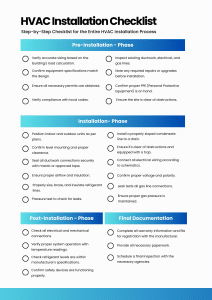
Pre-Installation Phase.
Here’s what you need to check before starting the installation process:
1. Verify Accurate Sizing Based on the Building’s Load Calculation
Before installation, you must verify the size of the selected HVAC for optimal performance.
A Manual J load calculation helps identify the correct capacity based on factors like square footage, insulation, windows, and climate conditions. It ensures the system is neither too big nor too small for your place.
2. Confirm Equipment Specifications Match the Design
Every HVAC system should align with the building’s heating and cooling needs. Verify that the selected equipment (e.g., air handler, condenser, furnace, or heat pump) matches the planned system design, ensuring efficiency and compatibility with existing infrastructure.
3. Ensure All Necessary Permits Are Obtained
You require certain permits to comply with building regulations and safety codes before Starting the HVAC setup. To obtain these permits, you only need to contact local authorities.
They will help you secure the right permits before beginning work, preventing fines, project delays, or issues during inspections.
4. Verify Compliance with Local Codes
Did you know each region has specific building and HVAC codes to ensure safety and efficiency? Before installation, confirm that all components meet state and municipal codes regarding ventilation, electrical wiring, refrigerant handling, and gas connections.
5. Inspect Existing Ductwork, Electrical, and Gas Lines
Make sure you check the ductwork for leaks, damage, or blockages and electrical wiring to handle the system’s power requirements before starting the installation.
6. Note Any Required Repairs or Upgrades Before Installation
If inspections reveal damaged ductwork, outdated wiring, or faulty gas connections, these must be repaired or upgraded before proceeding. If you think you can skip this step, it can lead to inefficiencies, system malfunctions, or even safety hazards.
7. Confirm Proper PPE (Personal Protective Equipment) is On Hand
We know safety is of the utmost priority during installation. Hence, the installation team wears gloves, safety goggles, respirators, and protective clothing to safely handle refrigerants, electrical components, and sharp metal edges.
8. Ensure the Site is Clear of Obstructions
Clutter in installation places can cause serious accidents. Therefore, a clutter-free work area, with no furniture, debris, or obstacles, makes installation smoother.
During Installation Phase
Here’s a step-by-step installation process for you. Let’s have a look.
9. Position Indoor & Outdoor Units
Carefully place the units as planned, ensuring they fit seamlessly into the designated space for maximum efficiency.
10. Confirm Level Mounting & Clearance
A properly leveled unit with adequate space around it prevents operational issues and ensures smooth airflow.
11. Seal Ductwork Connections
You can ask the installation team to secure all duct joints with mastic sealant or approved tape to prevent air leaks and improve system efficiency.
12. Ensure Proper Airflow & Insulation
Did you know well-insulated ducts and unrestricted airflow help maintain consistent temperatures and energy savings? Keep it in mind while installing the HAVC system.
13. Size, Braze & Insulate Refrigerant Lines
Insulated and correct-size refrigerant lines enhance cooling efficiency and prevent energy loss.
14. Pressure Test for Leaks
A thorough pressure test during installation ensures no refrigerant leaks, keeping your system running safely and efficiently.
15. Install a Properly Sloped Condensate Line
A well-angled drain line prevents water buildup and avoids potential mold or system damage.
16. Check for Obstructions & Install a Trap
A clear, unobstructed drain line with a trap prevents water backflow and system malfunctions.
17. Connect Electrical Wiring
To avoid electrical hazards and ensure smooth operation, you must secure all wiring per schematics.
18. Confirm Voltage & Polarity
Confirm the voltage because proper voltage and correct polarity prevent electrical failures and extend the system’s lifespan.
19. Leak Test Gas Line Connections
Check gas lines for leaks to ensure safety and prevent potential hazards.
20. Ensure Proper Gas Pressure
Maintaining the correct gas pressure optimizes system performance and reduces fuel waste.
3. Post-Installation Phase
Here are the Final Checks for a Perfect HVAC Setup:
21. Inspect Electrical & Mechanical Connections
You must ensure everything is tightly secured so the system runs safely and efficiently.
22. Perform Initial System Startup
Fire up your new HVAC to confirm smooth operation.
23. Verify Proper Operation with Temperature Readings
Measure airflow and temperature to check if your system is cooling or heating as it should be.
24. Confirm Correct Airflow
You must make sure every room gets the right amount of air for consistent comfort.
25. Check Refrigerant Levels
Ensure refrigerant levels match the manufacturer’s specifications for peak performance.
26. Adjust Charge if Needed
You can fine-tune refrigerant levels to maximize efficiency and energy savings.
27. Clean Up the Job Site
No mess should be left behind—just a perfectly installed HVAC system. So clean the area.
28. Walk You Through the System and Provide Manuals
You must get a full rundown on operating and maintaining your new HVAC for long-term comfort.
4. Final Documentation
29. Register Your Warranty
Don’t forget to complete your warranty paperwork and register it with the manufacturer so you’re covered from day one.
30. Hand Over Important Paperwork
Take all essential documents, including manuals, invoices, and maintenance guidelines, for easy reference.
31. Schedule a Final Inspection
At last, schedule a final inspection to ensure your HVAC system meets all safety and compliance standards.
How to Find the Right HVAC Expert For Installation In Fort Worth?
Choosing the right HVAC expert in Fort Worth is essential for a smooth installation and long-term efficiency. Here are some tips to help you make the best decision:
1. Ask Around – Word of Mouth is Gold!
Your friends, family, and neighbours are some of the best sources of trusted recommendations. If someone has had a great experience with an HVAC expert, they can recommend them.
Besides this, online community groups like Facebook and Nextdoor are available. In these groups, locals often discuss their good & bad experiences.
2. Research Online Like a Pro
A quick Google search for “HVAC installation Fort Worth” can list top-rated professionals. You can also check various customer reviews on Google, the Better Business Bureau (BBB) or Yelp for reliability and customer satisfaction.
Add those companies to the list that have consistently high ratings and positive feedback on service quality, pricing, and professionalism.
3. Talk to the Experts – Compare Quotes!
Don’t just settle for the first technician you call. Get at least 3-4 quotes from different HVAC professionals. This helps you compare pricing, warranties, and service offerings. You can ask about their licenses, insurance, and experience to ensure you’re hiring a certified pro
A reliable expert will also take the time to assess your home’s needs rather than offering a one-size-fits-all solution.
Finding the right HVAC installer takes a little research, but with the right expert, you’ll enjoy a hassle-free installation and years of reliable comfort!
Conclusion: Get the Best HVAC Installation in Fort Worth
We understand that investing in a new HVAC system is a big decision. That’s why choosing the right unit, expert installer, and proper installation process is crucial to ensure long-term comfort and efficiency.
From understanding costs to following a thorough installation checklist, every step matters. So, take your time to research, compare quotes, and work with trusted professionals for a hassle-free experience.
Frequently Asked Questions About Cost Of New HVAC System
Q1. How much does a new HVAC system cost in Fort Worth?
Homeowners typically pay $7,000–$12,000 for a new HVAC system including installation.
Q2. What’s included in an HVAC installation checklist?
Key steps include load calculation, duct inspection, proper system sizing, and thermostat setup.
Q3. Does installation quality affect HVAC lifespan?
Yes, poor installation can reduce efficiency and shorten system life, while professional installation ensures peak performance.
Q4. Are there rebates for new HVAC systems in Fort Worth?
Yes, utility providers and manufacturers often offer rebates for high-efficiency systems.


